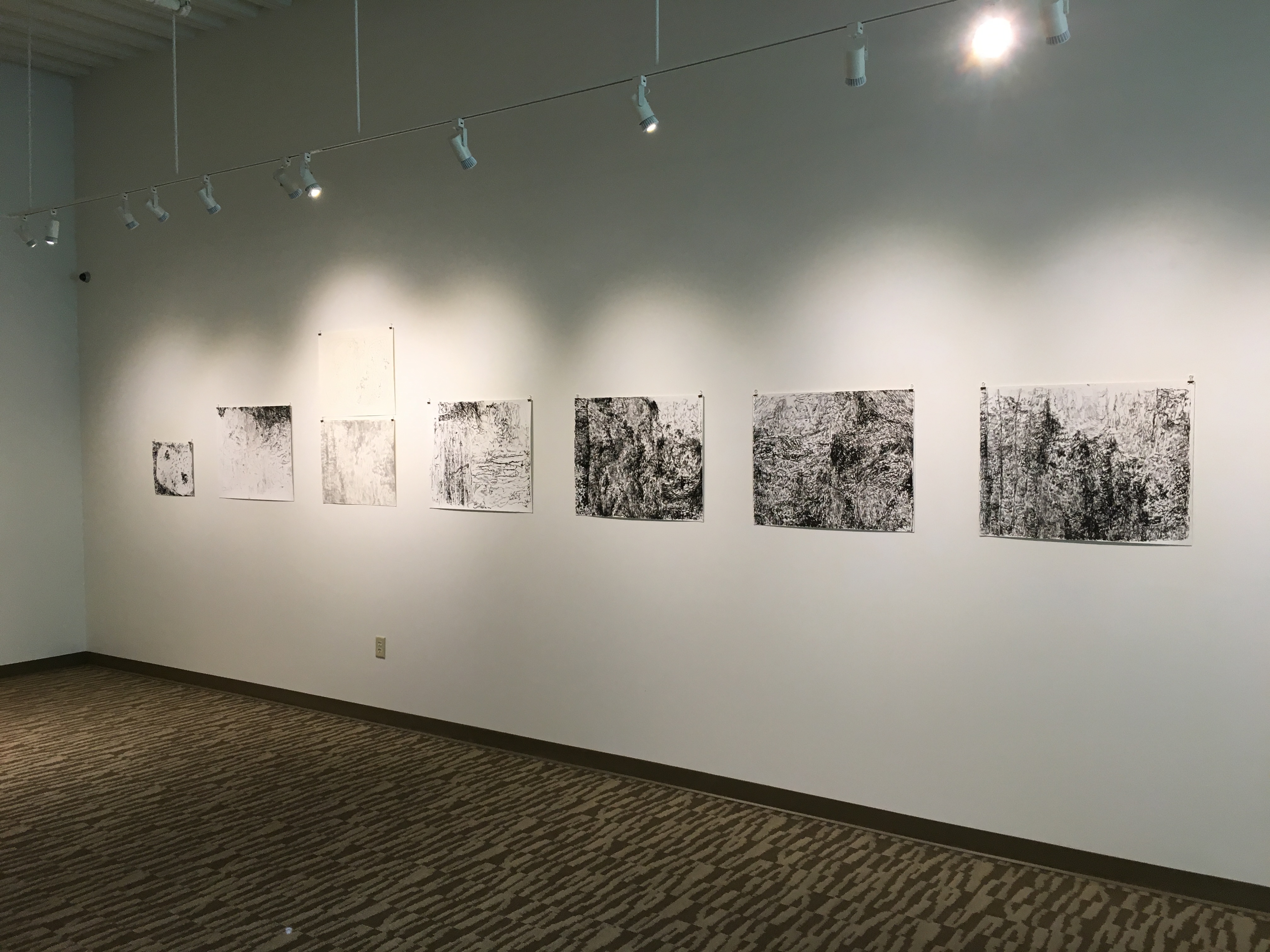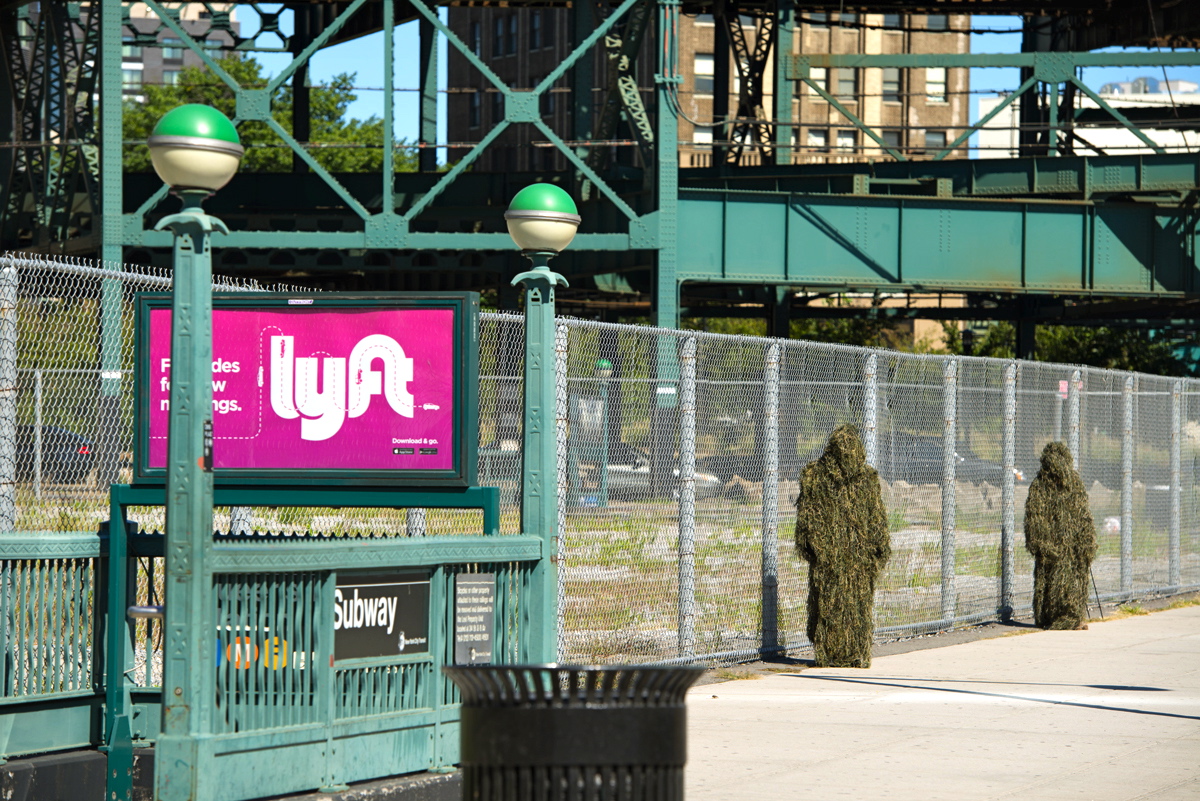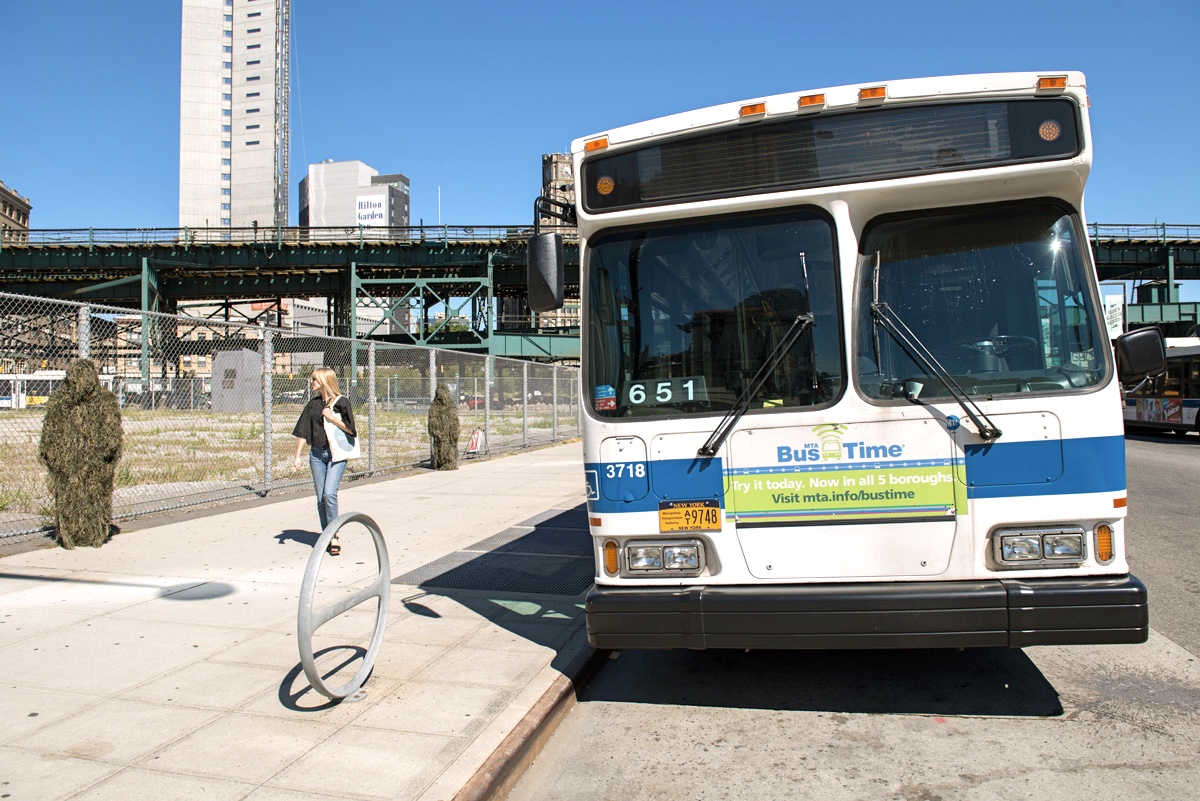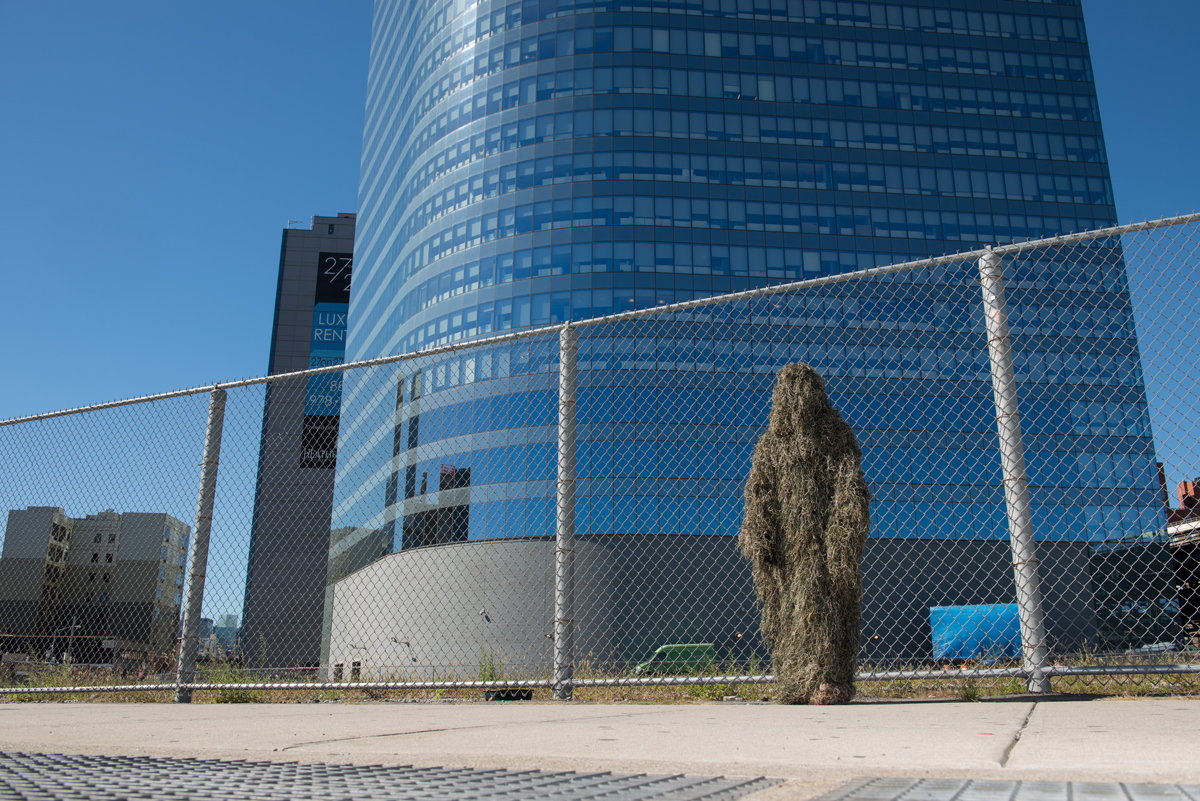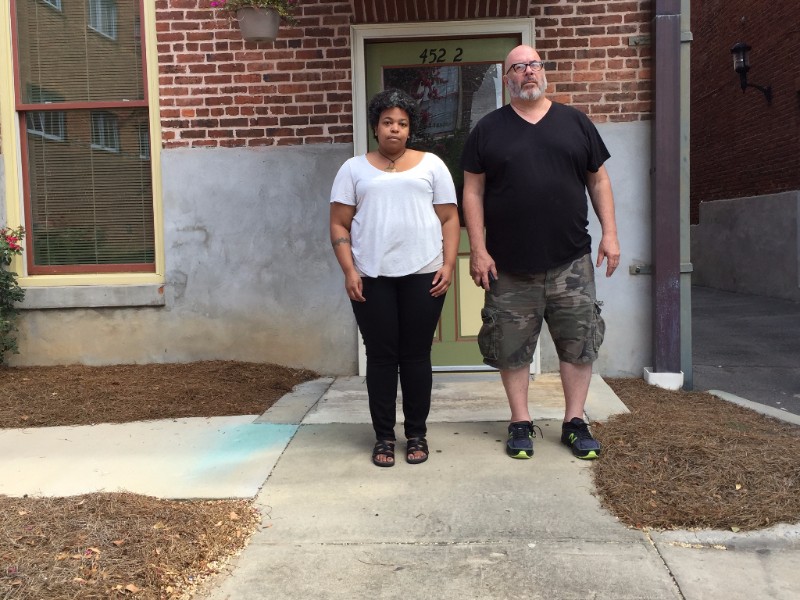
Artists Samantha Hill and Ed Woodham in front of their temporary downtown Macon apartment.
SOCIAL PRACTICE ARTISTS
RUN OUT OF TOWN
NEA FUNDED MILL HILL ARTIST RESIDENCY
IS ART WASHING
FOR IMMEDIATE RELEASE: Wednesday, July 27– Artists Samantha Hill from Chicago and Ed Woodham from Brooklyn have been terminated from the Mill Hill artist residency as of July 26, 2016 and requested to vacate their downtown Macon, Georgia apartment by Friday, July 29 after only 21 days of the 3-4 month long residency.
According to the Macon Arts Alliance website, the Mill Hill Visiting Social Practice Artist Residency is a 3 to 9-month residency program that brings together social practice artists, residents, and local artists. During their residency, visiting artists will work with local artists to engage the neighborhood in creative projects that will result in a creative assets map and cultural master plan for the neighborhood. These artists will partner with key stakeholders to develop programming that engages residents, families, and youth living in the area.
As Hill and Woodham began to connect with Macon residents, they realized that the goal of residency program was to create ‘art washing’ projects.
Quote about art washing from Save Boyle Heights Facebook Page:
“Developers have learned that a key tool in the speculative real estate game is the use of arts initiatives to change the composition of historically working class and poor neighborhoods. Art spaces move in, rents go up, tenants and local businesses are evicted, and capital washes away […]
Art-washing has become so prevalent that artists have to ask ourselves some extremely urgent questions. 1) What kind of art spaces are possible and what kind of art institutions do we need to not only refuse complicity but resist gentrification? 2) What kind of art practices can thrive and magically transform everyday life while refusing and resisting being a tool for growth by dispossession? And 3) what political movements can art contribute to that expose the lie of gentrification inevitability? ”
Woodham states, “Samantha and I worked in solidarity to look closely at 1) the possibility of displacement of the residents 2) the history of how East Macon was originally destroyed under the guise of urban renewal 3) how East Macon residents and Macon’s African American community genuinely felt that they were not represented accurately by the MAA.”
Hill states, “As we interviewed people from the neighborhood and talked to members of Macon’s African American community, it became very clear that Ed and I had been bamboozled and were part of a gentrification ‘art washing’ scenario. As we began to ask for genuine responses off script of the MAAs selected voices, we learned that many people in Macon’s art community felt marginalized by the narrow vision of the Macon Arts Alliance. Our findings were much different than the rhetoric presented in the Mill Hill Artist Residency call for artists and the Mill Hill webpage.”
Also according to the residency program guidelines, Hill and Woodham were going to live in East Macon so they could have an opportunity to be immersed in the Fort Hawkins neighborhood. According to a July 6 Knight Foundation (one of the Mill Hill major funders) blog post written by Jonathan Hartwell-Dye, Hill and Woodham were “moving into the Ft. Hawkins cottages in a few days” when in fact the artists were housed in a downtown Macon apartment since their arrival. “It wasn’t clear when the cottages would be ready for us to move in,” stated Woodham, “we asked for a walk through since our arrival and never got one. The cottages and a studio was part of our contract but it never happened.”
In a brief meeting on Tuesday evening at the Macon Arts Alliance (MAA) led by Jan Beeland, MAA Executive director joined by Jonathan Hartwell-Dye, MAA Director of Creative Placemaking, and Sam Mcfie, former MAA Board President, Mill Hill resident artists, Samantha Hill and Ed Woodham were informed via an exit letter:
“You have failed to participate in public relations and interviews related to the program and failed to work closely with the residents in the Mill Hill/Ft Hawkins neighborhood. Based on feedback from our partners and other community members, you have not been a positive representative of Mill Hill and the Program at all times. For these reasons, Mill Hill has chosen to terminate your participation in the Program immediately.”
“I think the MAA is afraid of what we were learning” says Woodham, “and as a result quickly terminated our contract offering a severance of one month’s stipend if we signed an agreement stating we were in the wrong.”
Neither Hill or Woodham signed the agreement nor accepted the severance check.
BIOS
Samantha Hill is a transdisciplinary artist from Chicago, IL with an emphasis on archives, oral story collecting & art facilitations. She received her MFA from the School of the Art Institute of Chicago and her BFA from Moore College of Art & Design. Hill developes public programs for art organizations including the Anchorage Museum, Hyde Park Art Center and McColl Center for Art & Innovation. Hill’s work is also featured in the book Problematizing Public Pedagogy, published by Routledge Press, Chicago Tribune and WBEZ 90.1 Chicago Public Radio. Hill’s current endeavor, the Kinship Project, is an archive of over 150 years of African American family photography and oral history recordings. She utilizes archives as source material for social engagement/installation projects to connect personal experiences to historic developments within regional culture.
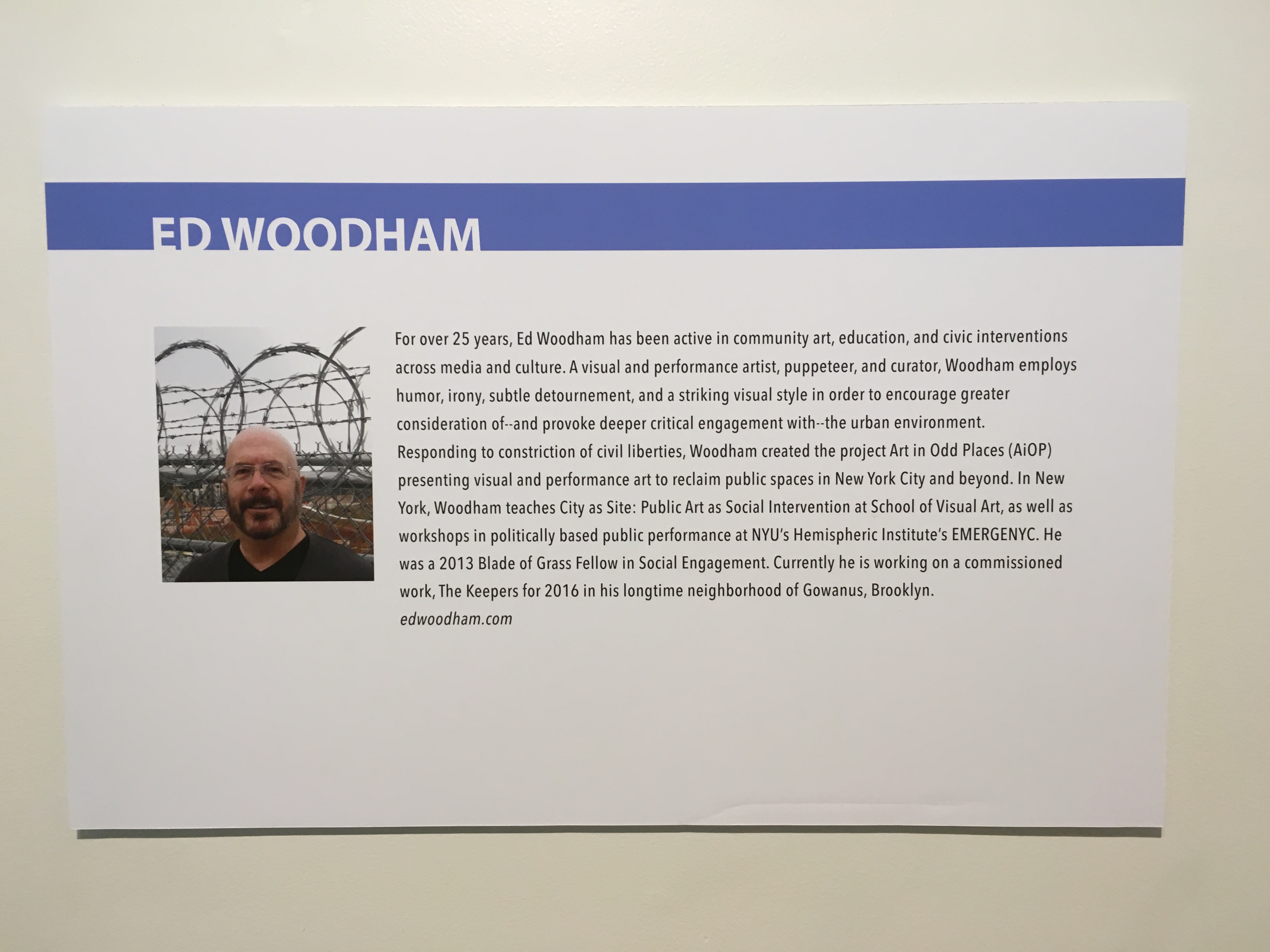
Ed Woodham has been active in community art, education, and civic interventions across media and culture for over twenty-five years. Responding to constriction of civil liberties, Woodham created the project Art in Odd Places presenting visual and performance art to reclaim public spaces in New York City and beyond. In New York, Woodham teaches “City as Site: Public Performance and Social Intervention” at the School of Visual Art, as well as workshops in politically based public performance at New York University’s Hemispheric Institute’s EMERGENYC. He was a 2013 Blade of Grass Fellow in Social Engagement. Currently, he is working on a commissioned work, “The Keepers,” for 2016 in his longtime neighborhood of Gowanus, Brooklyn.
For more information and high resolution photos contact:
Ed Woodham / edwoodham@gmail.com / 347-350-4242
Samantha Hill / shgallery@gmail.com / 773-828-9549